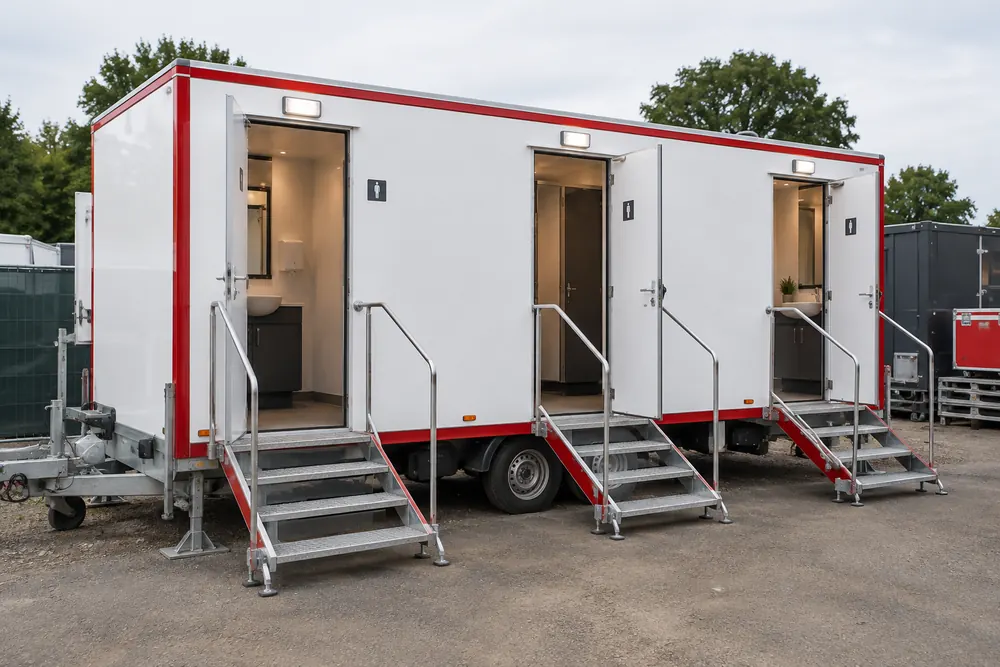
A Different Arrangement From Standalone Toilets
A toilet trailer brings several facilities into a towable unit, often with an internal wash area and a more enclosed presentation than standalone portable toilets. The offered specification should identify the actual cubicles, basins, heating, lighting and waste arrangement. Do not infer the facilities from a general description or an illustrative photograph.
Trailers can suit event contractor compounds, temporary commercial venues and projects where existing toilets are unavailable. Tell us whether the users are workers, staff, invited guests or public attendees. That distinction changes the expected demand, access considerations and cleaning arrangement, so it belongs at the start of the enquiry.
Understand Peak Use
A headcount is useful, but peak use is often more informative. Break times, interval periods and shift changes can concentrate demand. Describe event opening hours or the work pattern and explain whether other toilets remain available. The hire firm can then discuss the proposed layout against the likely use.
Include accessible provision as a separate requirement. Standard trailer steps do not provide an accessible route for every user, and a handrail does not change that. Ask about suitable alternatives or specific accessible equipment rather than assuming that an ordinary trailer can be adapted on the day.
Water, Waste And Electrical Connections
Some trailers need a suitable water supply and electrical connection, while others have onboard arrangements. Ask for the offered unit’s specification, connection points and expected servicing needs. If a holding tank is involved, agree its position and how it will be emptied without disrupting the event or blocking an access route.
Confirm who supplies hoses, cables and any protective routing across the site. Electrical installations need competent attention and equipment must be maintained to prevent danger under the Electricity at Work Regulations 1989. The supply should be assessed for the actual trailer rather than selected from a photograph or a previous hire.
Siting And Delivery
The trailer needs a stable, suitable standing area with space for towing, manoeuvring and positioning. Share photographs of gates, corners and the proposed location. Tell us about grass, gradients, soft areas and any access restrictions that may change with weather, especially when the collection date follows a heavily used event.
Plan the user approach as well as the towing route. Steps and handrails must be correctly installed and the entrance should remain usable after dark. Keep service vehicle access separate where practicable, and agree who will control the delivery area while the trailer is being positioned and made ready.
Welfare Duties Depend On The Use
When a trailer is used for construction workers, the project’s welfare arrangements should be assessed against Schedule 2 of the Construction (Design and Management) Regulations 2015. The toilet trailer does not replace separate rest, drinking water or changing facilities that the workforce requires.
The HSE construction washing guidance is relevant when checking whether the offered basins and water supply suit the work. For an event contract, the organiser should assess its own audience, staff and accessible provision. Do not assume that an arrangement suitable for a small contractor compound will suit public event demand.
Cleaning And Hire Cost
Agree who cleans the facilities during use, replaces consumables and checks water and waste levels. A delivery and collection package may not include an attendant. If your event runs over several sessions, explain the periods available for cleaning and servicing so those tasks can be arranged without closing every facility at once.
Toilet trailer hire cost depends on the layout, duration, transport, connections and servicing. Tank hire, attendants, extra visits and difficult access may change the total. Ask for these items to be identified, including any requirements for cleaning before return and the procedure for reporting damage or faults.
Prepare The Enquiry And The Handover
Include the location, dates, expected user numbers, operating hours and whether there is water, drainage and power. Describe any accessible facilities already available and the proposed standing surface. State when the trailer must be ready for use, allowing for the installation and connection work as well as arrival.
At handover, check access equipment, lighting, water and the agreed operating instructions. Confirm the arrangements for faults, servicing and collection with the supplying firm. For simpler contractor compounds, compare portable toilet hire, and include combined welfare facilities where staff need a rest area too.
Toilet Trailer Hire FAQs
Does A Toilet Trailer Need Mains Water?
A toilet trailer may need mains water, depending on the unit offered and its onboard arrangements. Ask for the specification before booking and explain whether the proposed position has a suitable supply. If stored water is proposed, agree replenishment responsibilities and servicing so the facilities remain usable throughout the hire.
Is A Standard Toilet Trailer Accessible?
A standard toilet trailer with steps should not be assumed to provide accessible facilities. Include your access requirements at enquiry stage and ask about a suitable layout or separate accessible equipment. Consider the approach route, standing surface and available space alongside the facilities inside, particularly for events with a varied audience.
Can Toilet Trailers Serve Construction Workers?
Toilet trailers can serve construction workers when the offered facilities suit the work and form part of a complete welfare arrangement. Check basin suitability and warm water, then address the separate rest, drinking water and changing needs. Explain site conditions and occupancy so a trailer is assessed against practical use rather than presentation alone.