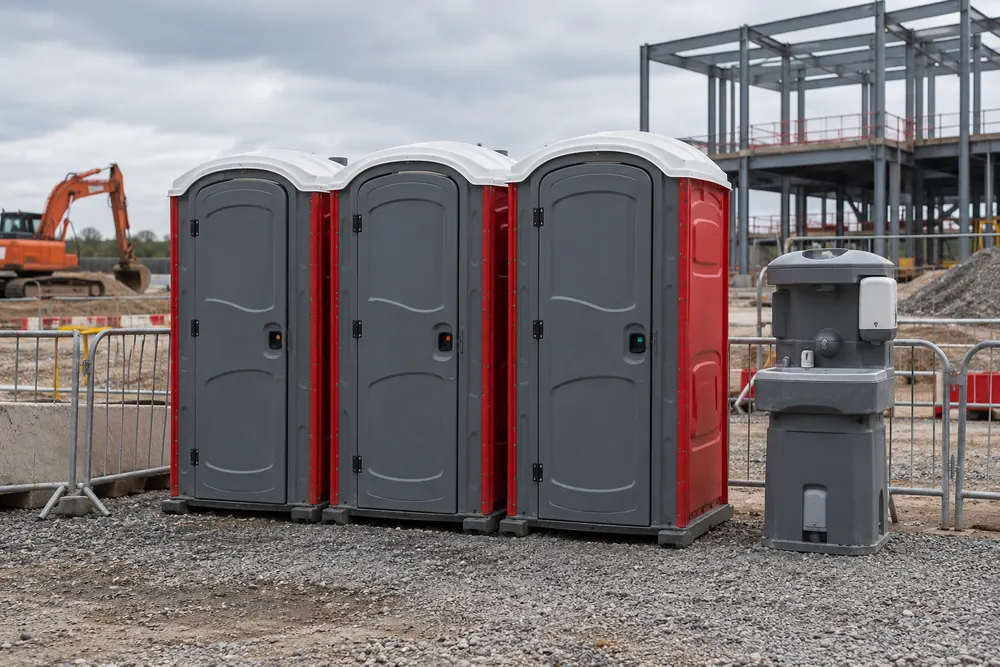
Choose A Toilet That Suits The Setting
Portable toilets provide a practical option where permanent facilities are unavailable or temporarily out of use. They can serve an early construction phase, a remote working area or an event contractor compound. The appropriate choice depends on access, duration, occupancy, services and whether staff need additional accessible provision.
Chemical toilets and mains-connected facilities have different operating requirements. A chemical unit stores waste for removal and needs a suitable servicing arrangement. A flushing facility may use mains drainage or a holding tank. Explain what connections are actually available rather than assuming that a nearby building can provide them.
Washing Provision Needs Its Own Check
Site toilet hire needs more than a count of cubicles. Consider where workers will wash and what they need to remove from their skin. Describe muddy work, cement handling and other exposure risks so the washing arrangement can be assessed alongside the toilet rather than left until delivery.
HSE guidance on construction toilets and washing explains that basins must allow appropriate washing of hands, face and forearms. Check basin dimensions and warm water provision. A small hand rinse basin or sanitiser dispenser should not be treated as an adequate substitute where the work requires proper washing facilities.
Numbers, Users And Service Frequency
The number of toilets depends on how many people will use them and how the work is organised. A team spread across several locations may need additional facilities even when total occupancy is modest. Include subcontractors, shift overlaps and expected visitors when describing demand.
Tell us whether the facilities are for workers only or also for event attendees. These are different usage patterns. Cleaning and emptying must be matched to actual use, and access for service vehicles must remain available after the compound is established. Agree what happens if demand increases during the hire.
Positioning And Delivery
Choose a stable, level position that is convenient for users and accessible for servicing. Keep the entrance away from vehicle manoeuvring areas where possible. Describe soft ground, kerbs, steep approaches and locked gates before a delivery arrangement is proposed.
Provide a postcode and a clear site contact, together with photographs if the route is constrained. Confirm the servicing vehicle can reach the unit within the supplier’s agreed operating limits. Do not move a filled toilet or improvise lifting arrangements without instructions from the hire firm.
Construction Duties And Daily Care
Schedule 2 of the Construction (Design and Management) Regulations 2015 applies to construction welfare. The responsible project team must check that toilets and associated facilities are suitable and sufficient. Hiring equipment is one part of that arrangement, alongside keeping the facilities usable for the full working period.
Set out who will inspect cleanliness, replace supplies and report faults between service visits. Emptying a waste tank is different from keeping the cubicle clean throughout a muddy shift. Allow for sanitary waste disposal where needed, secure doors, ventilation and lighting appropriate to the use and time of day.
Understanding The Quotation
Portable toilet hire cost depends on unit specification, quantity, duration, delivery and the servicing arrangement. Separate accessible units, warm water washing facilities, extra emptying visits and difficult delivery access can affect the total. Ask for the inclusions to be stated so competing quotations can be compared fairly.
Confirm minimum hire terms, collection arrangements, replenishment responsibilities and any restrictions on moving equipment. For a longer project, compare standalone toilets with a combined welfare unit. For event contracts requiring a different presentation or greater throughput, consider toilet trailer hire.
A Useful Brief Prevents The Wrong Order
Your enquiry should explain the work, who will use the toilets, the busiest expected period and whether there are existing washing facilities. Include the proposed location rather than only the main site entrance. If services have not yet been installed, say so clearly so the proposed equipment can be assessed against that constraint.
Review the facilities whenever the work area moves or the number of workers changes. Keep the route to the toilets usable in wet weather and check lighting if shifts continue into darkness. Small practical checks during the hire help keep the original arrangement useful as the job progresses.
Portable Toilet Hire FAQs
Are Portable Toilets Enough For A Construction Site?
Portable toilets alone may not provide the complete welfare needed on a construction site. Workers also need appropriate washing, drinking water and rest arrangements, with changing facilities where required. Check the proposed toilet and washing specification against the work, and consider whether a combined welfare unit would be a more practical arrangement.
How Often Should Site Toilets Be Serviced?
Site toilet servicing frequency should reflect occupancy, operating hours, tank capacity and the conditions on site. Agree a schedule with the hire firm and review it if use increases. Someone on site should also check cleanliness and consumables between visits, because a servicing appointment does not replace regular attention to the facilities.
Can Toilets Be Hired For Commercial Events?
Portable toilets can be requested for commercial events and contractor compounds. Include attendee or crew numbers, event hours, setup dates and collection access in the enquiry. Explain any accessible provision needed and whether water or drainage is available, so the proposed equipment and servicing can be assessed for that particular event.